Opportunity for Green Hydrogen Trading in India – Stakeholder Consultation Workshop on Developing a Roadmap for a Transparent and Efficient Green Hydrogen and Derivatives Trading Market in India
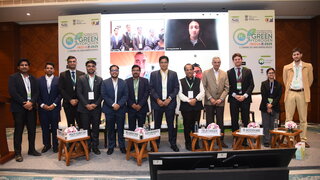
On Tuesday, 11 November 2025, the International Conference on Green Hydrogen (ICGH 2025) hosted Session 2D: “Opportunity for Green Hydrogen Trading in India – Stakeholder Consultation Workshop.” As part of the H2Uppp programme implemented by GIZ for the German Federal Ministry for Economic Affairs and Energy (BMWK), this session brought together Indian and international leaders to explore frameworks for a transparent hydrogen trading market tailored to India’s needs.
The session highlighted India’s rapidly expanding hydrogen demand, led by sectors such as refining, fertilizers, and steel, with emerging opportunities in shipping, aviation, and synthetic fuels. With ambitious goals under the National Green Hydrogen Mission—including a 2030 target of 5 million tonnes per annum (MTPA) of production and nearly ₹19,744 crore in government support—the session underscored both challenges and opportunities: while demand could reach 2.5 MTPA by 2030 and 5 MTPA by 2035, current supply around 1 MTPA is mainly traded within industrial clusters less than 300 km apart due to infrastructure and cost constraints.
The keynote address by Mr. Pradip Kumar Das (Chairman & Managing Director, IREDA) reaffirmed India's ambition to become a global hub for green hydrogen production and trade, emphasizing the importance of robust investment, supportive policy frameworks, and long-term offtake visibility for investors and market participants.
The panel discussion featured distinguished experts spanning government policy, market operations, industrial decarbonisation, and international trading. Dr. Prasad Chaphekar (MNRE) called for coordinated, long-term policy signals and transparent offtake structures to foster investor confidence and ensure market viability.
Mr. Rajesh Kumar Mediratta (IGX) shared that experience from India’s power and gas exchanges shows the need for long-term anchor contracts before robust short-term trading can emerge, highlighting the importance of developing a dedicated hydrogen price index and exploring Contracts-for-Difference (CfD) to manage price volatility.
From the European perspective, Mr. Sirko Beidatsch drew on lessons from the HYDRIX price index, underscoring that trust, transparency, and accessible market data are foundational for building liquidity in hydrogen trading.
In the Indian industry context, Mr. Braj Nandan Singh (Waaree Group) and Dr. Sachchida Nand (ICRIER/FAI) advocated for innovative contract models blending fixed and floating price components, while also recommending early involvement from financial institutions to help manage risk and encourage active market participation.
Mr. Felix Danger (Select New Energies GmbH) discussed how global trading experience can inform India’s journey to a mature hydrogen market, stressing the integration of international best practices and scalable frameworks.
All speakers agreed that as India advances from “electrons to molecules,” leveraging pilot clusters and fostering continuous knowledge exchange—supported by partnerships like GIZ’s engagement—will be pivotal in creating a structured, transparent, and internationally competitive hydrogen trading ecosystem.